Homeplanet


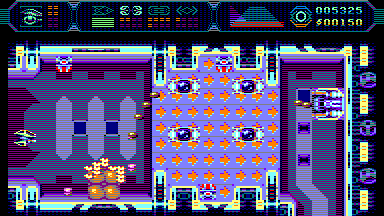
Screenshot of Homeplanet
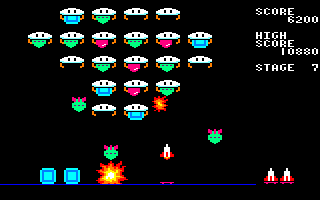
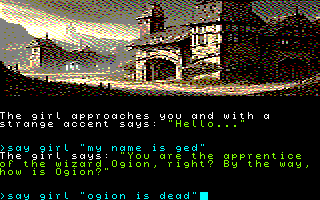
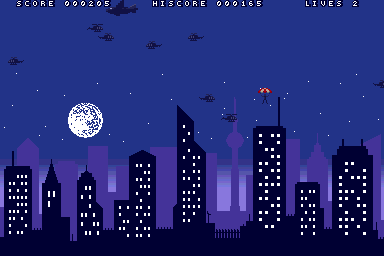
Revive8Bit has released another game. The latest one is called Homeplanet, and it’s a strategy game set in space. A giant mothership is travelling towards a planet – a journey spanning several generations – but it is under threat from the Vekhar. The mothership is part of a fleet of spacecraft which is divided into squadrons, and your mission is to guide the mothership towards the planet. As with most strategy games, it’s fairly complex, and despite an in-built tutorial, I haven’t had an opportunity to read the manual thoroughly and try to play the game properly. If you’re interested, Revive8Bit has uploaded a YouTube video, where there should be a pinned comment containing links to download the game and the instruction manual.

Ronald in the Maze


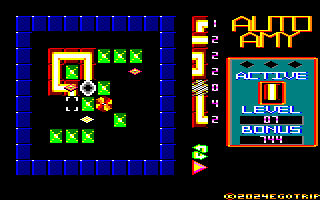
Screenshot of Ronald in the Maze
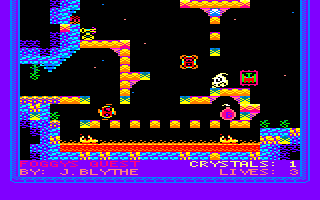
Denathorn Games has released their first Amstrad CPC game, called Ronald in the Maze. Ronald (not Roland!) was camping in the woods when he was abducted by aliens and transformed into a blue blob. You must guide Ronald through a series of mazes, collect coins and find the exit while avoiding contact with the aliens. Basically, it’s a Pac-Man clone, and it’s only available for the GX4000 and Plus machines. You can download Ronald in the Maze from the CPCWiki forum (which thankfully is now up and running again after spending several weeks offline during the summer!).

New reviews


I have reviewed three games, all of them text adventures:

Three games from Retro Parla


Last week, news broke about a ‘new’ game from Retro Parla called ¡Aparcao!, although it turns out that it’s been available on GitHub for nearly six months – and there are two other games on the Retro Parla GitHub site that also went unnoticed! If you’re not familiar with Retro Parla, it’s the name behind the cute puzzle game Longato from 2025.

¡Aparcao! is based on the puzzle game Rush Hour. Vehicles are laid out on a tiled board, and you must slide the vehicles horizontally or vertically so you can create a path for a red car to slide off the board. However, the board is only 6×6 tiles in size, and each vehicle can only slide along one axis (either horizontal or vertical), so movement is rather restricted, and you’ll often have to move vehicles to one place and then move them back again. That’s all part of the challenge, though, and there are dozens of puzzles to solve. The graphics are nice and colourful, if a little blocky, but it’s a shame there’s no sound at all.

Kessel Run is a very simple arcade game that sees you in a spaceship dodging oncoming ships, aliens and meteors on one of the most dangerous routes in the galaxy – the Kessel Run. Can you survive for more than 12 seconds in each of the three difficulty levels before your shield runs out? The graphics are basic but functional, and it’s good if you’re looking for something to play quickly for a few goes, but as with ¡Aparcao!, there are no sound effects or music.

The final game, Rubik’s Race, is based on the board game of the same name, in which you have to recreate a coloured pattern on a 5×5 tiled board by sliding tiles around. One- and two-player options are offered, but the two-player mode requires two CPC machines to be linked together via the expansion port. It looks appealing with its vivid colours, but just like the other two games, there’s no sound, and the lack of a timer to show you how long it took to solve a puzzle means this may not hold your interest for too long.

I have reviewed six games:


I have also rewritten my review of Crystals and revised its rating.

Fowl and Furious


Screenshot of Fowl and Furious
While I was away on holiday, Revive8Bit released another game in addition to the five that were released at the beginning of August. The latest one is called Fowl and Furious and it’s inspired by the hugely popular 2009 game Angry Birds. You have a team of either birds or green pigs, and using a slingshot, you must aim and fire the members of your team at structures in which members of the opposing team are hiding, causing them to collapse. I don’t recall any other games like this on the CPC. The graphics are colourful, albeit basic, and it’s fun for a while, but the scrolling is jerky and there is some screen corruption when the structures collapse.

Revive8Bit has uploaded a YouTube video, which contains a pinned comment containing links to download the game and the instruction manual.

Crystals


Last month, I reviewed a little-known game called Crystals. In my review, I questioned whether I had been playing an unfinished preview version. It turns out that I was! CPCManiaco has supplied a disc image of the 1992 release by DMV-Software. My original review will remain for now, but I intend to rewrite it when I get an opportunity to play the final version.

Creepers


In response to my mini-review of Creepers two days ago, Revive8Bit has released an updated version with smoother scrolling and no annoying flashing border. The download link can be found in the comments section of Revive8Bit’s YouTube video of the game.

A second Madballs game has been discovered!


Screenshot of Madballs (Ariolasoft)
Screenshot of a prototype of Ariolasoft's unreleased version of Madballs
If you were a child of the 1980s, you may remember Madballs – a series of bouncing ball toys with grotesque faces. They were popular enough for Ocean to release a game based on the characters, although it isn’t very good, and I rated it only 4 out of 10. However, what you probably didn’t know is that Ariolasoft was also planning their own Madballs game, and a prototype of this version has now been discovered!

Ariolasoft’s version is a pinball game with a pseudo-3D view, but the prototype doesn’t have any Madballs branding. It plays much like any version of pinball, but each table has a green and a pink circle, and bouncing the ball against them causes them to flash. If both circles are flashing, and the ball hits either of them again, you will be transported to another table. However, if only one circle is flashing, and the ball touches it again, it stops flashing – which makes going to other tables rather frustrating.

Why did Ariolasoft never release their version? According to the author, Ian Munro, Ariolasoft either lost the licensing rights, or failed to secure them, and thus Ocean managed to obtain the licence instead. Personally, I think Ariolasoft’s pinball-based game could have been an interesting use of a licence, and based on playing the prototype version, it would probably have been better than Ocean’s game. You can try it out for yourself by downloading it from Games That Weren’t. Thanks to Ian for granting permission for it to be released!

Liezere


Screenshot of Liezere
Every so often someone releases a game with an original, unusual or slightly quirky concept. Snauts’ latest release is a fishing simulation! Your friend has invited you to come with him to a frozen lake, and you must wander the lake, drill holes and manipulate your rod to catch some fish. The aim is to catch a ‘lunker’ – angling terminology for a particularly impressive catch. Your first few catches will be small, but the larger the fish you catch, the closer you are getting to the lunker. You also need to waggle the joystick or press keys on the keyboard alternately, but it’s important to get the timing right, so you needn’t worry about breaking your favourite joystick. You can download Liezere from itch.io.

Five games from Revive8Bit


A new entity named Revive8Bit has released five games – yes, five – in the space of a few days!

The first one is Aetheria – a platform game in which you control a ball of energy. Your task is to restart Aetheria – an engine the size of a moon that was built to power a dying star but has now fallen silent. You must explore the rooms within the engine, find weapons and skills to upgrade your own powers, locate switches to open locked doors, and dodge a variety of enemies who may fire shots at you. This is a fairly good game, and probably my favourite out of the five.

Chroma-Phaze: The Palette Puzzle is, as its name suggests, a puzzle game that involves colour. Each single-screen level contains at least one coloured barrier – either red, blue, green or yellow – and you can shift one colour at a time to make it disappear. The graphics are basic but the execution is clever, although I found it rather easy.

Creepers is the most original game of the lot. The Amstrad CPC has never had an equivalent of the popular, and hilarious, artillery game Worms – until now. If you’re not familiar with Worms, the gameplay involves each player (human or computer-controlled) in charge of a team of worms, and each player takes it in turn to move one worm and fire a shot at one or more opposing worms in the hope that they will lose energy and ultimately be killed. The graphics are again somewhat basic, the scrolling is very jerky and the border flickers very annoyingly a lot of the time, but it captures the fun of Worms reasonably well. Just don’t play it if you have epilepsy!

Mars Terraforming is a real-time resource-based strategy game that sees you attempting to colonise Mars. Can you transform this cold, lifeless planet into one that is habitable by humans? The game takes place on a board made of hexagons, and you build on the hexagons to create resources to enable the colony to survive and grow. I haven’t had a chance to look at this one properly as it seems quite complex (as a lot of strategy games are).

The fifth and final game is The Shaft. This is a platform game, and the background story is that you live in a deep vertical shaft below the surface. The world at the top of the shaft is supposed to be desolate, but you have found some photos from an inspector who left the shaft and came back that this isn’t the case, and you are determined to discover for yourself what it is really like out there. To reach the top, you will need to activate switches and find coloured keys in order to unlock doors that are marked with the same colour. I liked this one, although it’s a bit on the easy side.

At the moment, Revive8Bit’s web site is under construction, so to download the games, you’ll need to go to their YouTube channel and click on the appropriate video. Each video has a pinned comment containing links to a disc image of the game, and a PDF file of the manual.

Brick Blaster


News has come through of a new Breakout clone called Brick Blaster by issalig, although it’s been available on GitHub since last April. The rather outlandish story goes that you were riding your scooter to the local grocery store when you were abducted by an alien from Mars and incarcerated in a prison made of bricks. Now, armed with only an ironing board and a nuclear tennis ball (!), you must escape by knocking down the walls. As Breakout clones go, this one is pretty good, and I can imagine it would have been positively received back in the mid- to late 1980s had it been released then. You can play the game online or download a disc image.

Return Home


WacKEDmaN has been working on an arcade game that has also been on GitHub for a few weeks now. Return Home is a simple space shoot-’em-up, which according to the author has been written with the assistance of AI tools (specifically, Claude Code). You can download it from GitHub; the disc image is in the ‘dist’ directory.

I have reviewed five games. Three of them were released by DMV-Software via the German magazine CPC Amstrad International in its final few issues, and since the World Cup is nearing the final, the other two are football-themed.

The Dragon’s Forest


Screenshot of The Dragon's Forest
If you’re of a certain age, you may remember the Choose Your Own Adventure series of books, in which you make choices and move back and forth through the book instead of reading it in a linear fashion. The Dragon’s Forest is a new release by Lachlan Keown for the GX4000 console that recreates this format by using the joypad to confirm what you want to do next. What makes this game special is the fantastic video animations that accompany each location – something that I don’t recall seeing on any Amstrad CPC game previously. It has to be seen to be believed; a static screenshot, such as the one on the right, doesn’t do it justice, but Lachlan has uploaded a video to YouTube that shows the animations, and you can watch it below. The Dragon’s Forest can be downloaded from Dropbox.

Gameplay footage of The Dragon's Forest

Nick


Screenshot of Nick
Screenshot of Nick
Nick is a construction worker who stars in David Crespo’s third Amstrad CPC (and ZX Spectrum) game. Nick is building a road network, but the sections of road have been jumbled up and Nick must rearrange them so they are all connected properly. Like David’s previous two games, SkillTeam and Arby and Friends, Nick is based on a game by LukaszM on the Fancade platform. There are 50 levels of increasing difficulty, each with a password so you can return to a level without having to play the previous ones. Nick can be downloaded from itch.io, and you can also play it within your web browser from the same link.

Super Cableman


Screenshot of Super Cableman
Éric Cubizolle, better known as Titan, has released a new game called Super Cableman. The inspiration behind it came from a competition to write a program for the Amstrad CPC in only two lines of BASIC. One attempt was based on the Etch-a-Sketch toy where the user traces lines on a screen, and Titan has expanded it to a full-blown game with nine screens consisting of diverse scenarios. The first screen sees you guiding a cable through space debris towards an astronaut, while subsequent screens see you in a cave, a forest, the depths of the ocean, and even on a circuit board. This may be a simple “guide a line through a maze” Tron-style game, but Titan’s beautiful graphics, complemented by music from Pulsophonic, make it something special. You can download Super Cableman from Titan’s site.